Why the skilled labor shortage here and population growth in Africa is not a zero-sum game
“The future of work lies in Africa.” With this admittedly provocative thesis, I titled a text in 2025 that appeared in the edited volume by Professor Jens Nachtwei of Humboldt University Berlin (1). In it, I simply compare figures: on the one hand, the shrinking working-age population in Germany, and on the other, the rising population figures in Africa. On paper, it looks like a simple equation: here we are running out of skilled workers; there is strong population growth.
Many African countries are counting on training young talent who will then fill the gaps in Germany or Europe, either through emigration to Europe or through remote work in Africa. There is hardly an African country that hasn’t established a national IT skills program and launched an IT outsourcing initiative with Germany in mind.
But is this really a simple zero-sum game?
The honest answer is “unfortunately, no.” Considering the factors that play a crucial role in this game, the reasons for the answer quickly become clear:

Information Factor
In Germany, there is no sound knowledge about the education and qualifications of skilled workers in Africa. I’m leaving aside the fact that Africa is a vast continent whose education and higher education systems are hardly comparable anyway. Universities in South Africa have a different history and connections to, for example, the USA than universities in Morocco or Tunisia. The same applies to Ghana or Nigeria, or to East Africa, which, through the state institution Inter-University Council for East Africa (IUCEA), is attempting to establish a comprehensive, comparable education system.
Several German states have long-standing partnerships with African countries, for example, Baden-Württemberg with Burundi and Rhineland-Palatinate with Rwanda. More recently, Saxony established a partnership with Uganda. However, these partnerships have not resulted in sustainable educational partnerships that achieve a statistically measurable effect on a larger scale. While each of these initiatives is valuable, they do not have a direct impact on labor market policy.
In 2025, the state of Berlin launched the “Talent Bridges” project. To effectively address the ongoing shortage of skilled workers in Germany, the Berlin Chamber of Industry and Commerce (IHK) initiated a model project for securing skilled workers internationally. Under the auspices of the non-profit organization Talentsbridge eV, and in cooperation with the IHK Berlin, a training center is being established in Namibia. This center will qualify skilled workers according to German standards and prepare them for both the German and Namibian job markets. The IHK plans the project as a scalable pilot model, allowing for expansion to up to 3,000 trainees per year.
The question is, why Namibia? The country has just under three million inhabitants, and the German trade and investment agency GTAI writes about Namibia: The desert state of Namibia in southwest Africa is sparsely populated. Extensive agriculture, tourism, and the extraction of mineral resources shape its economy (2). In terms of gross domestic product (GDP), Namibia is one of the world’s smaller economies (ranked 147th out of 197 countries according to GeoRank, approximately USD 13.4 billion in 2025; 3).
Access is certainly facilitated by the fact that the capital, Windhoek, is Berlin’s twin city and that Namibia was once a German colony. This provides existing structures that can be leveraged, for example, regarding language skills. But is this sufficient as a foundation for a talent bridge to the German capital?
Berlin has a unique economic structure within Germany, characterized by its administration and government, very small businesses, and a vibrant international startup scene with numerous universities. Namibia is not a country with a strong industrial base, a major startup hub, or a large student metropolis (according to the DAAD, there were only 212 scholarships from Namibia in 2024, compared to the total number awarded to students in Germany). Accra, Lagos, Nairobi, or Cairo (which already boasts two German Egyptian universities, the German University Cairo (GUC) and the German International University of Applied Sciences (GIU)) are certainly more representative of Berlin’s profile.
This kind of “chance” is often encountered when examining educational projects in Africa more closely. This factor doesn’t argue against such projects, but rather underscores the importance of carefully examining, with a clear strategy, where the framework conditions align in a way that is beneficial for both sides.

Access Factor
A brief look at Asia is worthwhile here. “The future of the world will be decided in Eurasia,” the Frankfurter Allgemeine Zeitung (FAZ 4) recently headlined. This thesis, in this or a similar form, has been put forward for decades. The view is based on the region’s immense population, rich resources, and growing economic importance. This sounds very similar to the discussion about Africa as an economic region. However, Eurasia is in a completely different league when it comes to economic and labor market indicators in Germany. Two examples from the labor market illustrate this point:
- Skilled workers from India: Currently, almost as many skilled workers come to Germany from India alone as from the entire continent of Africa. In March 2024, around 138,000 Indian skilled workers were employed in Germany, a number that is steadily increasing (5). Against this backdrop, the German government (6) has announced new measures to facilitate the relocation and employment of Indian skilled workers as part of its “Focus on India” plan. According to a study by the Bertelsmann Foundation, however, labor migration from Africa remained at a low level of six percent of total immigration from third countries in 2023 (7).
- Government-funded projects promoting immigration from third countries: African countries play no role in programs such as Triple Win or Hand in Hand for International Talents. Since 2013, the GIZ, in cooperation with the Federal Employment Agency (BA), has placed more than 8,000 nursing professionals and trainees from partner countries in approximately 400 healthcare and nursing facilities in Germany through the Triple Win program; of these, more than 6,000 have already arrived (as of October 23, 2025). Africa is not a partner country in this project. Kenya is currently the only African country with which Germany has concluded a general migration agreement, but in the third quarter of 2024, only about 90 Kenyan nurses arrived in Germany. The German government-funded Hand in Hand for International Talents program also has no African partner countries.
Geopolitics clearly plays a major role as a strategy here. Eurasia has established access to the economic sphere for significantly longer than Africa has to date. This starts with transport links, extends to global networking, and includes international events. “Opportunities create chances” is a well-known principle in sports. Where there’s no bobsled track, you can’t bobsled. The President of Rwanda announced at the FIA General Assembly in Kigali in December 2024 (an opportunity!) that Formula 1 races would be held in the capital city (a chance!). A prime example of opportunities creating chances. And Friedrich Merz, then Chancellor of Germany, was in Angola in November 2025 to participate in the EU-Africa Summit in Luanda. However, the public only took notice because the Chancellor missed having German bread for breakfast. Otherwise, it was apparently an international meeting in Africa with no relevance to German economic or labor market policy. No opportunity, no chances.
These are surely just anecdotal side stories. But they illustrate the difference in the state of the discussion about the economic area of Eurasia compared to Africa.

Historical Factor
If there’s a common thread running through all German education projects in Africa, it’s the issue of “brain drain.” These projects generally aim to empower local professionals, which is perfectly fine.
This often hinders labor market policy projects. Access to skilled workers is simply an economic factor. Other countries, such as India and Uzbekistan, are taking a very targeted approach. Uzbekistan is promoting the orderly deployment of skilled workers and supporting applicants with language and education courses. Germany is one of the preferred partners for this initiative. The Agency for Migration has been established. This agency is the government’s responsibility for issues related to the deployment of skilled workers abroad. Now, state-accredited, private employment agencies have been brought into the process and will also be responsible for organizing the necessary preparatory vocational training and language courses.
While nation-states are establishing formal recruitment structures to facilitate access to foreign trade for their own skilled workers, other European countries are already further ahead than Germany in this regard, particularly concerning Africa. This is clearly illustrated by the example of professional truck drivers. Germany is experiencing a significant and growing shortage of these drivers (see here). At the same time, the recruitment of drivers from non-EU countries is still in its infancy. In the last three years, just under 3,000 drivers from non-EU countries have been recruited, predominantly from Eastern Europe. This is due to the Western Balkans Regulation, which allows skilled workers from these countries to enter Germany for employment with virtually no obstacles. For these skilled workers, Germany is a target labor market. Understandably, German logistics companies prefer the easier route to recruiting skilled workers.
Against this backdrop, countries like Romania and Poland began recruiting professional drivers from India, Morocco, and Kenya much earlier. For drivers from these countries, Europe is certainly an attractive destination, and salaries in Romania and Poland are definitely lucrative enough. Often, English language skills are sufficient for professional work there. In contrast, Indian or Kenyan professional drivers are a rare exception in Germany.

Factor Management
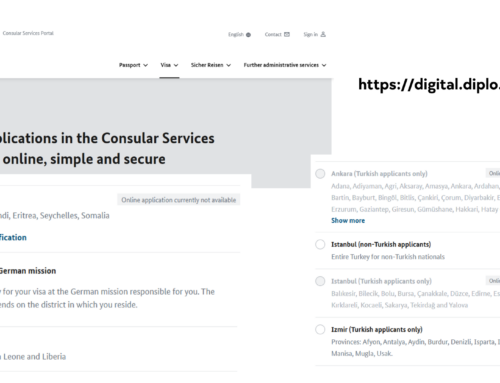
Bureaucracy and stringent requirements deter many qualified applicants. Although comprehensive statistics on rejected visa applications are difficult to access, there are indications that rejection rates are sometimes significant. A parliamentary inquiry submitted in April 2025 by Member of Parliament Clara Bünger and the Left Party regarding visa issuances in 2024 states: “Rejection rates are particularly high in sub-Saharan African countries.” (8)
This conclusion from a Deutsche Welle report perfectly summarizes the situation. In Nigeria, the waiting list for an appointment for the “Chancenkarte” (a type of visa application) is more than twelve months long – regardless of whether one applies via the German government’s digital portal or tries to get an appointment in person. In Rwanda, since August 2025, all Schengen visas must be applied for via Nairobi. Rwandan citizens traveling to Germany for up to 90 days (Schengen visa) submit their applications via TLS – Nairobi at the Belgian embassy. Specifically, this means that applicants must invest at least 48 hours of their time and a considerable amount of money to obtain a Schengen visa. There may be exceptional reasons for this situation, but they are, in fact, quite systematic.
Deutsche Welle has taken a closer look at the figures and discovered that Schengen visa applications from Africa are rejected more frequently than applications from other regions. While there are no figures available on the rejection rate of German work visas by country of application or over time, this information does exist for Schengen visas for short stays. Here, a clear picture emerges: people from sub-Saharan Africa have significantly lower chances; their Schengen visa applications are rejected more often than those from people in other regions. This applies both to applications submitted at German embassies and consulates and to applications submitted at the embassies and consulates of other Schengen states.
And the “chance” card doesn’t really apply to Africa either. Over €13,000 must be deposited into a blocked account to be able to take the trip, even if the requirements are met. This hurdle is too high for the vast majority of candidates. And not everyone has acquaintances or relatives in Germany who can act as guarantors.
In summary, it is not a zero-sum game. From a game-theoretical perspective, one can now examine which of the aforementioned variables are changeable and which are unchangeable.
The answer is simple: None of the factors mentioned above are immutable. Therefore, there remains hope for skilled workers from Africa. However, it will take a long time for the transformation of these factors to take effect. It’s possible that by then it will be too late for the German labor market, and these young skilled workers from Africa will be shaping the future elsewhere.
This is all the more true when considering the issue from the perspective of African states. Germany is not a top-tier destination country, and in some cases, it doesn’t even make the cut. English-speaking countries are far more attractive to African professionals, as are countries in Europe where English is more widely spoken than in Germany, such as the Baltic or Nordic countries. African professionals often have a different perception of Germany as a target job market. German engineering carries weight, but the companies they prefer tend to have American names. The global competition for top talent remains fierce, and many countries are experiencing a shrinking working-age population. Therefore, the skilled labor shortage in Germany and population growth in Africa are not a zero-sum game.
The text includes footnote numbers, which are citation references. Sources are available upon request; moreover, we respect all copyrights.
Beitrag von