he situation in the logistics sector remains tense. On one hand, rising fuel prices continue to put pressure on companies. On the other, there is a growing shortage of professional drivers, while recruitment itself is becoming increasingly expensive.
The German Federal Government has now adopted measures that had already been available as a draft bill for more than a year. These changes are intended to ease access to the profession and expand the pool of candidates who may become deployable in Germany with less administrative effort.
Three key changes:
a) Exams will be possible in several languages
- In future, the accelerated basic qualification exam will be available not only in German, but also in several foreign languages: English, Modern Standard Arabic, Polish, Romanian, Croatian, Russian, Turkish and Ukrainian.
- In addition, the language catalogue for the theoretical driving licence test is to be expanded to include Ukrainian and Kurmanji.
- The practical examination will also be shortened from the current 210 minutes to 120.
b) Recognition of foreign driving licences will become easier
- Driving licences from third countries that have already been exchanged in another EU member state are expected to be recognised in Germany in the future.
c). Ukraine and Montenegro to be added to Annex 11 of the German Driving Licence Regulation
Ukraine and Montenegro are to be included in Annex 11 of the German Driving Licence Regulation. This would allow driving licences from these countries to be converted into German driving licences without an additional driving test.
The amendment is expected to come into force this year.
Remaining challenges for drivers from third countries
Despite these changes, significant hurdles remain for many experienced drivers from third countries. For a large part of the available candidate pool, obtaining an EU driving licence and a valid driver qualification certificate remains a key challenge.
Another factor is the cost of driver turnover, which is often underestimated. Hidden costs arise from onboarding, loss of know-how, inefficient planning processes and repeated recruitment efforts.
In many companies, digitalisation measures are still primarily focused on efficiency and cost reduction. However, if they are not combined with better working conditions and stronger retention measures, they may even contribute to higher turnover rather than reducing it.
The Federal Employment Agency does not publish an official industry-wide turnover rate specifically for professional truck drivers in Germany. However, industry observations, including those from the BGL, indicate a critical shortage in many areas. Depending on the estimate, Germany is currently short of around 70,000 to more than 100,000 truck drivers.
Demographics add further pressure. In 2022, more than one third of professional drivers were at least 55 years old and are therefore approaching retirement age.
Recruitment alone will not solve the problem
When discussing the recruitment of skilled workers from abroad, some assume that a large global talent pool can simply be activated and that qualifications or integration play a minor role. That view is too simplistic.
Mobile devices, translation tools and navigation apps can support daily work, but they do not replace proper training, professional qualification, communication skills or workplace integration.
The real challenge will be to train, motivate and integrate new drivers in a way that makes them stay with an employer long term. This requires time, structure and commitment from companies.
In conclusion, regulatory and approval processes are expected to become easier. At the same time, the requirements for the long-term integration of new drivers will increase.
Recruiting professional drivers from third countries only pays off when companies take a holistic approach.
Where companies get stuck in practice
On paper, international hiring often sounds straightforward. Identify a candidate, prepare the contract, organise the paperwork, and plan the start date. In reality, this is where things often begin to slow down.
Most delays do not happen because the candidate is unsuitable. They happen because execution is underestimated.
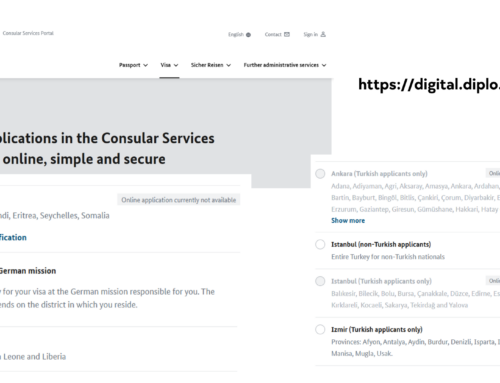
Visa feasibility, recognition procedures, deadlines, documentation, communication with authorities, and the actual onboarding process in Germany are often more complex than companies expect. Then there are practical issues such as relocation, integration, and the simple question of whether the intended start date is realistic at all. This is where companies lose time, money, and planning certainty.
The Berlin strategy identifies many of the right priorities. But for many SMEs, the real question remains: who handles all of this internally when there is neither the time nor the experience to manage it properly? A political strategy only becomes useful when it can be translated into clear, workable processes.
Article by